


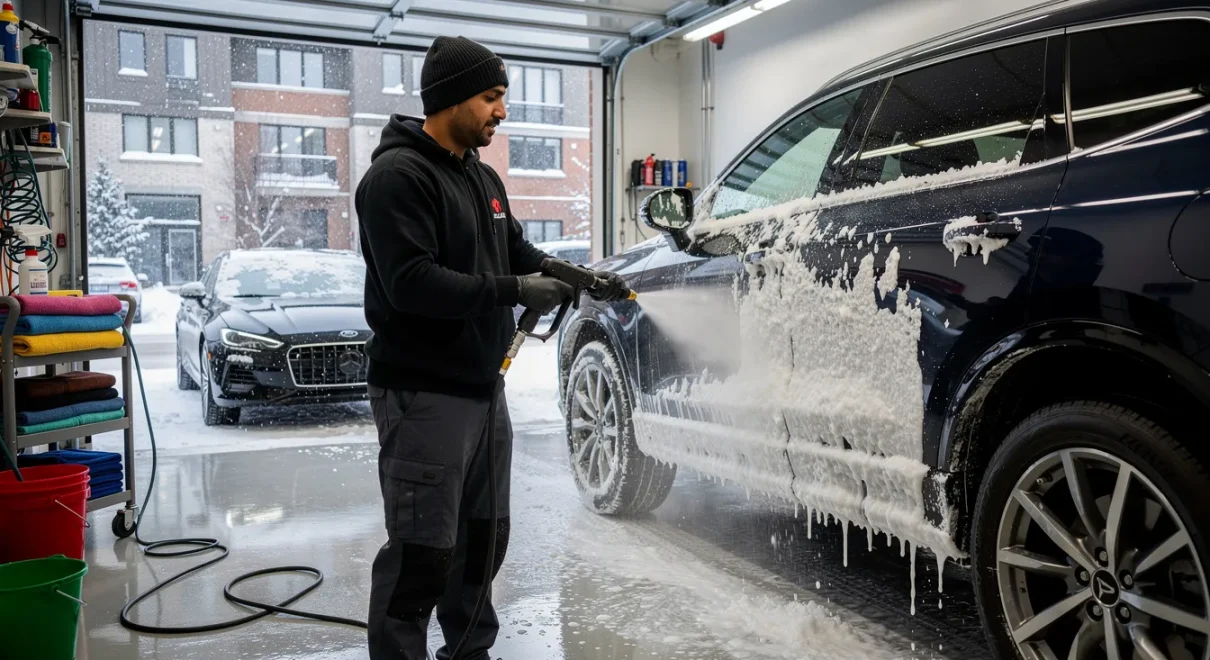
Salt, Slush & Shine: How to Properly Clean Your Car During a Toronto Winter
The first real snowfall in Scarborough usually arrives with a familiar sight: a grey-white crust creeping up every door panel in the parking lot. That crust is road salt and brine, and it is the single most destructive thing your vehicle will face all year. Washing a car in January feels like a chore nobody wants, yet skipping it is exactly how a three-year-old vehicle ends up with bubbling rocker panels and dull, chalky paint.
The good news is that cleaning a vehicle properly in winter is not complicated. It just requires a different routine than a summer wash. This guide walks through how to clean your car in winter the right way, from the undercarriage to the floor mats, so your ride comes out of April looking the way it went into November.
Why Winter Cleaning Is Different
In summer, dirt sits on top of the paint. In winter, the contamination is chemically active. Toronto and the GTA treat roads with rock salt and liquid brine, and brine is the bigger problem: it clings to every surface as a fine mist and stays wet and corrosive at temperatures where plain salt would simply sit there.
Three things make winter grime especially harmful:
- Salt and brine attract moisture. Even on a dry day, the residue keeps pulling humidity from the air and holding it against metal, which is how rust starts in seams, wheel wells, and brake lines.
- Freeze-thaw cycles work the grit in. Slush freezes overnight, expands in tiny gaps around trim and chips, then thaws and lets more salt water in.
- You wash less often. Short days and cold weather mean most drivers go weeks between washes, giving the salt plenty of time to do its work.
If you followed our winterizing checklist in the fall, your paint already has a layer of protection. Regular cleaning is what keeps that protection doing its job.
How Often Should You Wash Your Car in Winter?
Aim for a proper wash every one to two weeks during salt season, and sooner after a major storm or a long highway drive on freshly treated roads. If the car is visibly white with residue, it is overdue.
Step-by-Step: Washing the Exterior Properly
1. Pick the right conditions
Wash when it is above 0°C if at all possible, ideally in daylight or in a heated bay. Water that freezes on the paint before you can dry it can leave spotting, lock up door handles, and freeze wiper blades to the glass. Never pour hot water on a cold windshield or frozen paint. The thermal shock can crack glass and damage clear coat.
2. Rinse the undercarriage first
This is the step most people skip, and it is the most important one. Use a pressure washer or a hose with an undercarriage attachment to flush the wheel wells, rocker panels, subframe, suspension components, and behind the bumpers. Work from front to back and give each wheel well a full thirty seconds. This is where salt collects and where rust begins.
3. Pre-soak before you touch the paint
Salt crust is abrasive. Rubbing a wash mitt across it is like sanding your clear coat. Apply a pH-neutral snow foam or pre-wash and let it dwell for a few minutes so the heavy grit lifts and rinses away. Rinse thoroughly from the top down before the contact wash.
4. Use the two-bucket method
Fill one bucket with your shampoo solution and a second with clean rinse water, both with grit guards. Wash one panel at a time with a microfibre mitt, rinse the mitt in the clean bucket before reloading it with soap, and work from the roof down so the dirtiest areas (lower doors and bumpers) are done last. Use a separate mitt for the lower third of the vehicle.
5. Clean wheels, tires, and wheel wells separately
Brake dust mixed with salt bonds hard to alloy wheels. Use a dedicated, non-acidic wheel cleaner and brushes that never touch the paint. Scrub the inner barrels and the plastic wheel-well liners, which trap more salt than any other part of the car.
6. Dry everything, including the hidden spots
Towel-dry the body, then open every door, the trunk, and the fuel door and wipe the jambs, sills, and rubber seals dry. Trapped water here is what freezes doors shut overnight. A wipe of silicone-based protectant on the seals keeps them pliable and stops them sticking.
Don’t Forget the Interior
Winter is just as hard on the inside of your vehicle. Snow melts off boots, carries salt into the carpet, and leaves those stubborn white rings that reappear every time the mat dries.
- Switch to rubber all-weather mats with raised edges, and shake them out regularly.
- Treat salt stains early. A 50/50 mix of white vinegar and warm water, blotted (not scrubbed) into the carpet, breaks down salt deposits. Follow with clean water and a wet-dry vacuum.
- Fight moisture. Wet carpets fog windows and breed mildew. Run the air conditioning with heat to dehumidify the cabin, and keep a moisture absorber under the seat.
If the salt has already set deep into the carpet or you are seeing stains on leather, a professional full interior and exterior detailing service with hot-water extraction will remove what household methods cannot.
Protect After You Clean
A clean surface is the perfect time to add protection. At minimum, apply a spray sealant after each winter wash; it takes five minutes and gives salt and brine a slick surface to slide off instead of bonding to the paint.
For a longer-term solution, a professional IGL ceramic coating creates a hard, hydrophobic layer rated for years of protection, not weeks. Coated vehicles are dramatically easier to clean in winter because contamination releases with a simple rinse, and the coating shields the clear coat from the chemical attack of brine. Paint protection film on the front bumper, hood, and rocker panels adds a physical barrier against the sand and gravel that get thrown up with the salt.
Common Winter Washing Mistakes to Avoid
- Relying only on brush-style automatic washes. The brushes carry grit from the car before yours, and most do not rinse the undercarriage well.
- Washing in direct sub-zero temperatures with no way to dry the car afterwards.
- Using dish soap, which strips any wax or sealant you have and leaves the paint unprotected.
- Ignoring the door jambs and seals, leading to frozen doors and premature rust.
- Waiting for spring. Months of accumulated salt do far more damage than a few extra washes would have cost.
When to Call the Professionals
A home wash every couple of weeks keeps salt in check. But a mid-winter professional detail, with a heated bay, proper undercarriage flushing, hot-water carpet extraction, and a fresh layer of protection, resets the clock on the entire season.
If your vehicle is already wearing a coat of Toronto road salt, book an appointment with Left Lane Customs in Scarborough. We will get it clean, protected, and ready for whatever the rest of winter throws at it.
Visit us on Facebook at our Facebook Link and our Instagram Link. Left Lane Customs Inc.