


Faded Paint or Swirl Marks? 7 Signs Your Car Is Begging for Professional Paint Correction
Run your hand over your car’s hood on a sunny afternoon and look closely at the reflection. If you see spiderweb-like scratches, a hazy film, or dull patches where there used to be a mirror-like shine, your paint is telling you something: it’s damaged, and no amount of washing or waxing is going to fix it. These are the telltale signs that your vehicle needs professional paint correction — a process that goes far beyond a car wash to actually repair the surface of your clear coat.
Most drivers don’t realize how much damage has accumulated until it’s pointed out to them. Here’s what to look for, why it happens, and what actually fixes it.
1. Swirl Marks Under Direct Sunlight
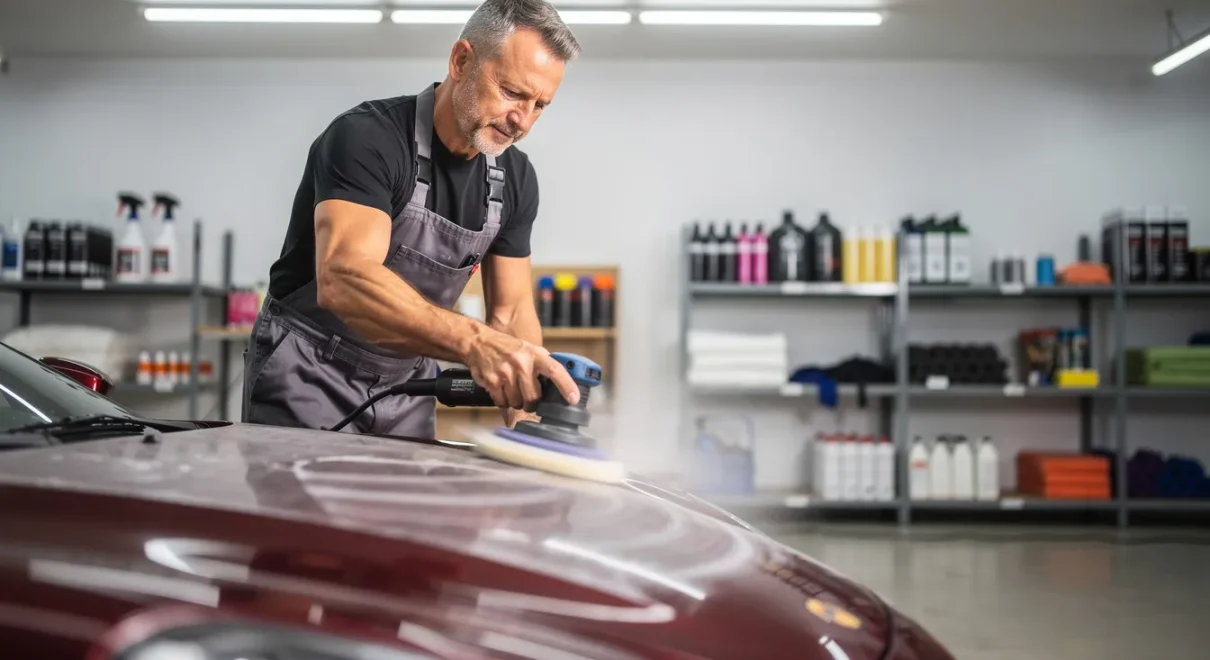
The most common and most misunderstood paint defect is swirl marks — those fine, circular scratches that seem to appear out of nowhere. They’re almost always caused by improper washing: dirty wash mitts, automatic car washes with brushes, or drying with a regular towel instead of a microfiber cloth. Under direct sun or garage lighting, swirl marks catch the light and create a cloudy, spiderweb appearance across the paint. Once they’re there, washing and waxing will never remove them — only a proper paint correction process, using graduated polishing compounds and machine buffing, can level the clear coat and eliminate them.
2. A Hazy or Dull Finish That Won’t Shine
If your paint looks flat or cloudy even right after a wash, you’re likely looking at oxidation — a chemical breakdown of the clear coat caused by prolonged UV exposure. Oxidized paint loses its ability to reflect light cleanly, which is why it looks “foggy” instead of glossy. We cover exactly how this breakdown happens in our guide on why your car’s paint fades over time and how ceramic coating protects it. The good news: in most cases, this is correctable. Paint correction removes the oxidized top layer to reveal the healthy paint underneath.
3. Water Spots That Won’t Wash Away
If you’ve ever let your car air-dry in the sun, you’ve probably noticed water spots that seem permanently etched into the paint. These happen when mineral deposits in the water bond to the clear coat as it evaporates, and over time the heat can actually etch the surface. Light water spots sometimes buff out with polish, but deeper etching requires a full correction pass to remove the damaged layer.
4. Noticeable Scratches You Can Feel With Your Fingernail
There’s a simple test detailers use: run a fingernail lightly across a scratch. If your nail catches or drags, the scratch has gone through the clear coat and needs correction — possibly combined with touch-up work if it’s reached the base color coat. Surface-level scratches that don’t catch a fingernail are usually correctable with polishing alone.
5. Random Dark or Light Patches After Washing
If certain panels look noticeably duller or lighter than others after a wash, this usually points to uneven oxidation or inconsistent prior care — common on vehicles that were washed infrequently or with abrasive products in the past. Correction evens out these inconsistencies so the whole vehicle reflects light uniformly again.
6. Paint That Looks “Tired” Even When Clean
Sometimes there’s no obvious scratch or spot — the paint just looks old. This is typically a combination of micro-marring (thousands of tiny scratches invisible individually but collectively dulling the finish) built up over years of washing, drying, and environmental exposure. This is one of the most dramatic transformations correction can deliver, because it’s often invisible until it’s gone.
7. It’s Been Years Since Any Protective Treatment
If you can’t remember the last time your car had wax, sealant, or coating applied, your paint has likely been defending itself with nothing but the factory clear coat for a long time. That’s a strong sign correction is due — and once the surface is restored, it’s the ideal time to apply a long-term protective layer rather than leaving fresh, corrected paint exposed again. We compare the two leading options in ceramic coating vs. wax: which is better for your car’s protection, and for drivers wanting maximum defense against future rock chips and road debris, our PPF vs. ceramic coating guide for Toronto car owners breaks down which combination fits your driving habits.
Why DIY Products Can’t Fix This
Store-bought “scratch removers” and all-in-one polishes are designed to be safe for amateur use, which means they’re also too mild to correct real paint defects. Worse, used incorrectly, they can thin the clear coat unevenly and create new problems. Professional paint correction uses a multi-stage machine polishing process with precisely matched compounds and pads for your specific paint condition — something that takes trained hands and the right equipment to do safely.
Swirl marks, haze, and water spots aren’t cosmetic quirks you have to live with — they’re signs of damage that gets worse the longer it’s left untreated. Left alone, oxidized and scratched clear coat becomes more vulnerable to further UV damage, staining, and eventually the kind of breakdown that exposes bare metal underneath. Catching these signs early and correcting them properly not only restores your car’s shine, it protects the investment underneath.
If any of these signs sound familiar, it’s worth having a professional take a look before the damage progresses further. Check out our full range of paint correction and protection options on our services page — your paint will thank you.
Visit us on Facebook at our Facebook Link and our Instagram Link. Left Lane Customs Inc.