


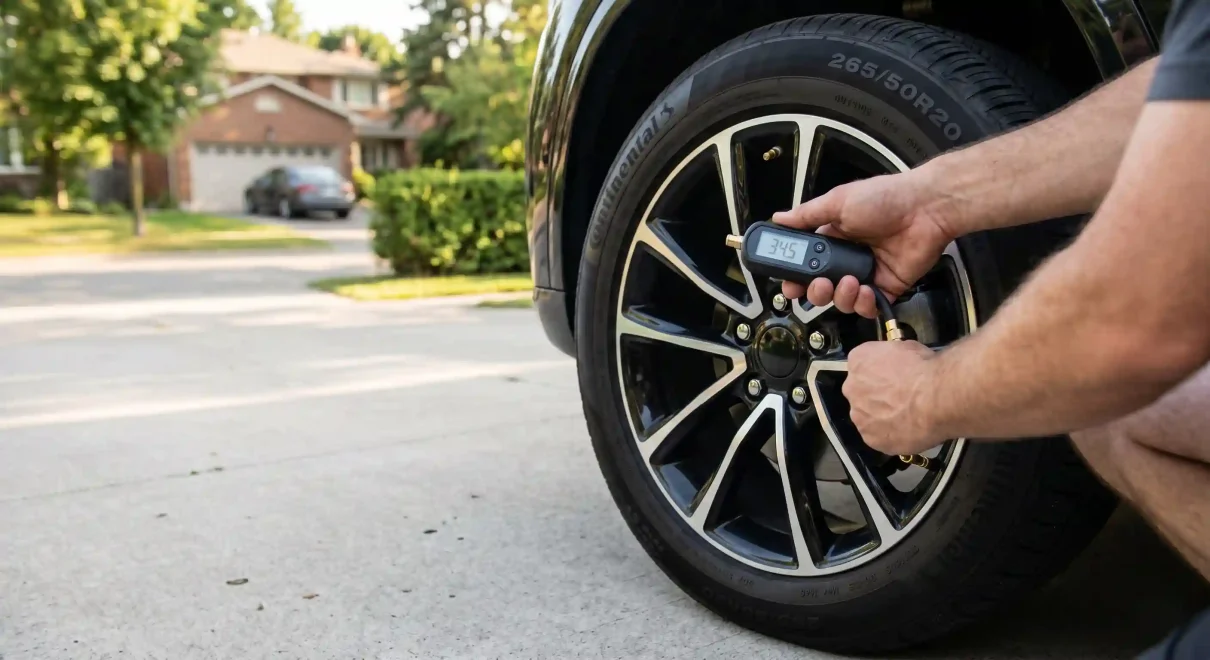
The Pressure Is On: How Tire Air Pressure Directly Impacts Your Safety on Toronto’s Roads
Tire pressure represents the most overlooked yet critical safety factor affecting every kilometer you drive on Toronto’s demanding roads. While drivers obsess over engine performance, braking systems, and visibility, the four small contact patches connecting your vehicle to the pavement—each roughly the size of your hand—depend entirely on proper air pressure to deliver the traction, stability, and control that safe driving demands. Toronto’s extreme temperature swings, pothole-riddled infrastructure, and challenging seasonal conditions create tire pressure challenges that silently compromise safety for thousands of drivers daily. Understanding how air pressure affects vehicle dynamics, recognizing warning signs, and implementing proper monitoring routines transforms this neglected maintenance item into a powerful safety advantage protecting you and your passengers on every journey.
The Science of Tire Pressure and Vehicle Control
Tire pressure directly determines the shape and size of the contact patch where rubber meets road, fundamentally affecting every aspect of vehicle behavior. Properly inflated tires maintain the engineered contact patch shape that manufacturers designed for optimal grip, handling response, and braking performance.
Underinflated tires flex excessively during operation, creating irregular contact patches that concentrate wear on outer edges while reducing the effective grip area during cornering and braking. This flexing generates internal heat that degrades tire structure, potentially causing the catastrophic blowouts that create highway emergencies at the worst possible moments.
Overinflated tires create the opposite problem, bulging the center tread and reducing contact patch size dramatically. The smaller grip area decreases traction during acceleration, braking, and cornering while creating the harsh ride quality and center-tread wear patterns that reduce tire lifespan and compromise wet-weather performance.
The relationship between pressure and stopping distance proves particularly critical on Toronto’s congested roads. Tests consistently demonstrate that tires underinflated by just 20% can increase stopping distances by 5-10 meters from highway speeds—often the difference between a close call and a collision on the 401 during rush hour.
Hydroplaning resistance depends heavily on proper inflation maintaining tread groove depth and contact patch geometry that channels water away from the tire-road interface. Underinflated tires hydroplane at lower speeds, creating sudden control loss during the heavy rain events that Toronto’s climate regularly delivers.
Toronto’s Temperature Swings: The Silent Pressure Thief
Toronto’s dramatic temperature variations create constant tire pressure fluctuations that catch unprepared drivers in dangerous situations. Understanding this relationship enables the proactive monitoring that maintains safety throughout seasonal transitions.
Tire pressure decreases approximately 1 PSI for every 5-6°C temperature drop, meaning the 30-40°C swings between Toronto’s summer heat and winter cold create pressure variations of 6-8 PSI without any air loss through leaks. Tires properly inflated during a warm October afternoon become dangerously underinflated by the first January cold snap.
The morning pressure check trap catches many diligent drivers who verify pressure after driving, when tire heat from operation has temporarily increased readings by 3-4 PSI. Accurate pressure measurement requires cold tires that haven’t operated for at least three hours, making morning checks before driving the gold standard for accuracy.
Winter’s extreme cold creates particular dangers as overnight temperature drops leave tires significantly underinflated during morning commutes when road conditions already challenge traction. The combination of reduced pressure and icy surfaces multiplies risks during the season demanding maximum tire performance.
Seasonal pressure adjustment routines should accompany Toronto’s temperature transitions, with monthly checks during stable weather and weekly verification during periods of dramatic temperature change. This vigilance maintains the consistent pressure that safety demands across all conditions.
Warning Signs of Improper Tire Pressure
Recognizing pressure-related warning signs enables intervention before minor issues become dangerous situations. Several indicators deserve immediate attention from safety-conscious drivers.
Vehicle pulling toward one side during straight-line driving often indicates pressure imbalance between tires on opposite sides. This asymmetry affects steering response and braking stability while accelerating wear on the underinflated tire experiencing increased flexing and heat generation.
Increased steering effort or vague steering response suggests underinflation affecting the tire sidewall stiffness that crisp steering demands. The disconnected feeling that underinflated tires create reduces driver confidence and control precision during emergency maneuvers.
Tire Pressure Monitoring System (TPMS) warnings illuminate when pressure drops 25% below recommended levels—a threshold representing significant safety compromise rather than early warning. Treating TPMS alerts as urgent rather than advisory prevents driving on dangerously underinflated tires.
Visible tire bulging at the bottom indicates severe underinflation requiring immediate attention before driving. The excessive sidewall flexing this condition creates generates heat rapidly, potentially causing structural failure within kilometers of continued operation.
Uneven tread wear patterns reveal chronic pressure problems, with outer-edge wear indicating sustained underinflation and center wear suggesting overinflation. Regular tread inspection during washing identifies these patterns before they significantly compromise tire lifespan and safety.
Fuel Economy and Environmental Impact
Beyond safety, proper tire pressure delivers significant fuel economy benefits that affect both operating costs and environmental footprint. Underinflated tires increase rolling resistance, forcing engines to work harder maintaining speed.
Tires underinflated by 10 PSI can reduce fuel economy by 3-5%, translating to $100-200 in additional annual fuel costs for typical Toronto commuters. This waste compounds across the vehicle fleet, making proper inflation one of the simplest collective environmental actions available.
Electric vehicle range suffers proportionally from underinflation, with the increased rolling resistance directly reducing the kilometers available from each charge. EV owners face direct range anxiety consequences from neglected tire pressure that conventional vehicle drivers experience as gradual fuel cost increases.
Protecting Your Wheels and Tires Through Professional Care
Tire and wheel condition affects pressure retention, with damaged components creating slow leaks that constant monitoring cannot fully address. Professional care identifies and prevents the issues that compromise pressure stability.
Professional detailing services include wheel cleaning that reveals damage, corrosion, and valve stem deterioration hidden beneath accumulated brake dust and road grime. Clean wheels enable the visual inspection that identifies developing problems before they create pressure loss.
Corroded wheel surfaces at the tire bead interface create slow leaks that gradual pressure loss reveals. Ceramic coating services for wheels prevent the corrosion that Toronto’s road salt creates, maintaining the smooth sealing surfaces that pressure retention requires while simplifying the regular cleaning that wheel longevity demands.
Valve stem condition deserves attention during professional service as these small components deteriorate from age, UV exposure, and road salt contact. Cracked or corroded valve stems create the slow leaks that mysteriously deflate tires despite absence of punctures or visible damage.
Pothole impacts from Toronto’s notorious road conditions can damage wheel rims, creating bends or cracks that compromise the airtight seal between tire and wheel. Professional inspection after significant impacts identifies damage requiring attention before pressure loss creates safety risks.
Tire Pressure and Vehicle Protection Integration
Comprehensive vehicle care integrates tire maintenance with the protection strategies that preserve overall vehicle condition and value. This holistic approach maximizes both safety and investment protection.
Paint protection film on rocker panels and lower body areas defends against the stone chips and debris damage that underinflated tires throw with increased frequency. Properly inflated tires reduce debris ejection while protected surfaces resist the damage that road contact creates.
Wheel well protection through professional treatments prevents the corrosion that affects components housed within these exposed areas, including TPMS sensors that monitor the pressure your safety depends upon. Protected sensors maintain reliable operation throughout Toronto’s corrosive winter conditions.
Window tinting services using XPEL ceramic films maintain clear visibility of dashboard TPMS displays while reducing the glare that obscures warning lights during bright conditions. Clear instrument visibility ensures pressure warnings receive the immediate attention that safety requires.
Proper Pressure Monitoring Routine
Establishing systematic pressure monitoring routines maintains the consistent inflation that safety demands. Several best practices ensure accurate measurement and appropriate adjustment.
Monthly pressure checks using a quality gauge provide the baseline monitoring that stable conditions require. Digital gauges offer superior accuracy compared to pencil-style alternatives, with quality units costing under $20 while delivering years of reliable service.
The recommended pressure specifications appear on the driver’s door jamb placard rather than the tire sidewall, which displays maximum rather than recommended pressure. Following vehicle-specific recommendations ensures the pressure matching your vehicle’s engineering rather than generic tire capabilities.
Spare tire pressure verification during regular checks prevents the discovery of useless flat spares during roadside emergencies. Temporary spares typically require 60 PSI—far higher than standard tires—making their neglect particularly consequential during stressful situations.
Cold-weather adjustment ensures winter pressure matches recommendations despite temperature-driven decreases. Adding 2-3 PSI during late fall prepares tires for winter’s pressure-reducing temperatures while maintaining safe inflation throughout the season.
Tire pressure represents the foundation of vehicle safety that every Toronto driver controls directly through simple monitoring and adjustment routines. The dramatic effects on stopping distance, handling, and stability make proper inflation one of the most powerful safety tools available at virtually no cost.
Toronto’s challenging climate demands the vigilant pressure monitoring that temperature swings and harsh conditions require. Integrating tire care with comprehensive professional vehicle protection creates the complete maintenance approach that both safety and value preservation demand.
For Toronto drivers committed to safety and vehicle condition, proper tire pressure maintenance combined with professional vehicle care delivers protection where it matters most—on every kilometer of every journey.
Visit us on Facebook at our Facebook Link and our Instagram Link. Left Lane Customs Inc.