


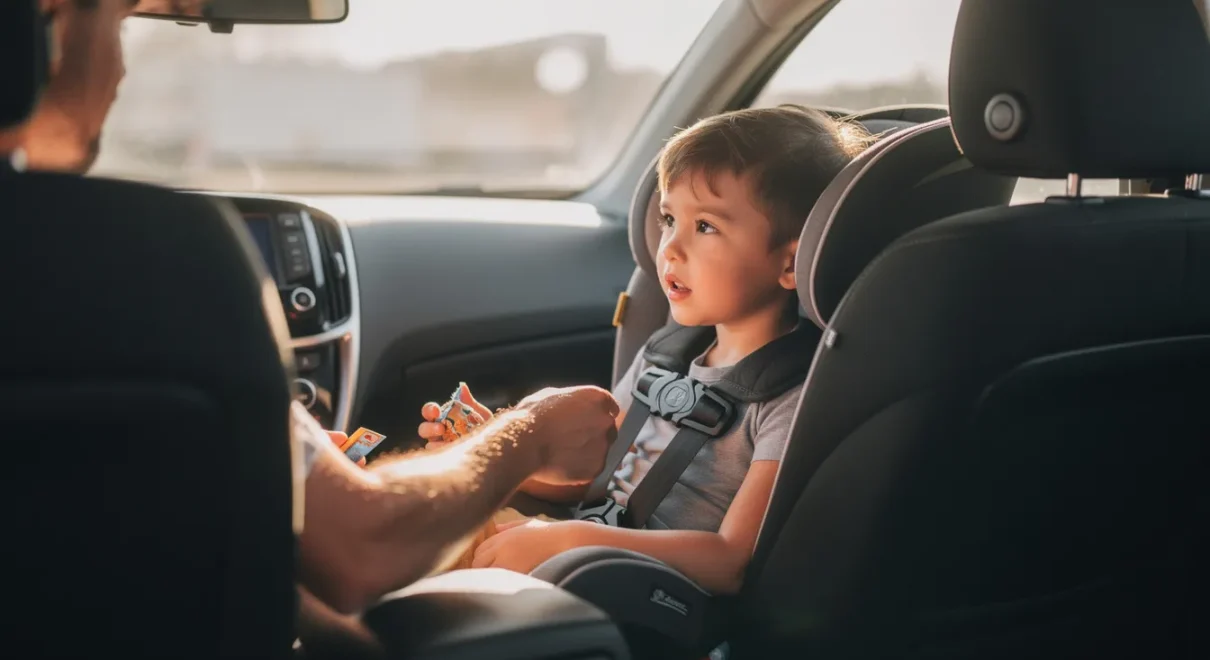
Before You Buckle Up: 6 Car Seat & Travel Mistakes Toronto Parents Don’t Realize They’re Making
You check the mirrors, you check the gas, you check the diaper bag. But how often do you actually check whether your kid’s car seat still fits them properly? For most parents, the answer is: not since it was first installed.
Driving with small children comes with a longer safety checklist than most people realize, and a lot of it isn’t obvious unless you’ve specifically looked it up. Here’s what actually matters — starting with the law, and going well beyond it.
1. Know the Stage, Not Just the Age
Ontario’s car seat rules are based on weight and height as much as age, and a lot of parents move kids through the stages too early simply because a birthday passed. Here’s the actual breakdown under Ontario’s Highway Traffic Act:
- Rear-facing: required from birth until at least 9 kg (20 lb) — but health authorities recommend staying rear-facing well past that, ideally to age 2 or beyond, or until the seat’s maximum rear-facing limit
- Forward-facing with a harness: for children roughly 9 to 18 kg (20 to 40 lb)
- Booster seat: required for children under 8 who weigh 18 to 36 kg (40 to 80 lb) and are under 145 cm tall
- Seatbelt alone: only once a child hits one of three milestones — turning 8, reaching 36 kg (80 lb), or standing 145 cm tall — and the belt fits them properly on its own
The golden rule pediatric safety groups keep repeating: keep your child at each stage as long as the seat allows, not just until they technically qualify for the next one.
2. The Booster Seat Mistake Almost Nobody Catches
Booster seats reduce serious injury risk by roughly 3.5 times compared to a seatbelt alone — but only if the belt actually fits right once the booster’s in place. One study found that nearly a third of kids using booster seats don’t yet meet the minimum weight requirement to use one safely.
The fit test takes 30 seconds: the shoulder strap should sit centred across the collarbone, not near the neck or falling off the shoulder, and the lap belt should sit low across the hips and thighs, not up on the stomach. If it doesn’t fit that way, the booster — or the seat position — needs adjusting.
3. Every Ride Counts, Not Just Road Trips
It’s easy to be diligent about car seats for a long drive to the cottage and casual about the five-minute trip to daycare. But most car seat–related injuries don’t happen on highways — they happen on short, familiar drives close to home, precisely because that’s when parents are most likely to skip a step or rush a buckle. Treat the two-minute drive with the same checklist as the two-hour one.
If you’re already thinking about longer summer trips with the kids, our checklist of what every Toronto driver should check before summer driving is worth running through before you load up the car — tires, fluids, and AC performance matter even more with kids in the back seat for a long stretch.
4. Never, Even “Just for a Minute”
This is the one that’s hardest to hear, and the most important. According to Transport Canada, the interior of a previously air-conditioned vehicle can climb past 50°C in just 20 minutes, even on a mild 20°C day. A child’s body heats up three to five times faster than an adult’s, and cracking a window does almost nothing to slow it down.
On average, one child dies in a hot vehicle in Canada every year — and it’s rarely a case of a careless parent. It’s almost always a break from routine: a different drop-off, a sudden schedule change, a moment of distraction. The only real prevention is habit: never leave a child alone in the car, for any amount of time, for any reason.
5. Sun Exposure Adds Up Fast in the Back Seat
Even when the temperature isn’t extreme, direct sun through the rear windows means kids are absorbing UV exposure and heat for the whole ride — something a lot of parents don’t think about until a long summer drive leaves a toddler cranky, sunburned, or overheated in their seat.
This is one of the more overlooked reasons parents look into ceramic window tint — not just for privacy, but because a quality tint blocks a significant amount of heat and UV before it ever reaches the back seat. If it’s something you’ve been considering, our ceramic tinting service is worth a look before your next long drive with the kids.
6. Know What’s Happening Behind You Without Turning Around
Every parent knows the instinct to glance in the rearview mirror at a stop light to check on a fussy toddler — which is exactly the kind of momentary distraction that’s easy to avoid with the right setup. Some modern camera systems include an interior-facing camera specifically for keeping an eye on the back seat without taking your attention off the road.
We covered the broader case for upgrading your camera system in our guide on why your car’s camera system is worth more than you think — for parents specifically, it’s one of the more practical upgrades that pays off on every single drive.
Bonus: Keep the Back Seat Actually Clean
Small kids mean spilled juice boxes, crushed crackers, and stains that seem to appear out of nowhere. Beyond the mess, a poorly cleaned interior can hide crumbs and grime in the folds of a car seat itself, which isn’t great for hygiene on longer trips. Our DIY car wash guide has practical techniques that work just as well on interiors as they do on paint — worth a look before the next long drive, not just after it.
The Bottom Line
Driving with small kids isn’t just about getting the car seat installed once and calling it done. It’s the stage-by-stage fit, the seatbelt check every single ride, the habit of never leaving them alone in the car even briefly, and the smaller details — sun exposure, visibility, a clean interior — that add up to a genuinely safer ride every time you buckle up.
Want your vehicle set up to make every drive with your kids a little easier and safer? Book a visit with Left Lane Customs and we’ll help you get there.
Visit us on Facebook at our Facebook Link and our Instagram Link. Left Lane Customs Inc.