


The DIY Car Wash Bible: Professional-Grade Home Washing Techniques Toronto Drivers Need to Know
Washing your vehicle seems straightforward until you discover the swirl marks, water spots, and paint scratches that improper technique silently inflicts during every cleaning session. Toronto vehicle owners who wash their cars at home often unknowingly cause more damage than they prevent, gradually degrading paint quality through repeated mistakes that professional detailers spend considerable time correcting. Understanding proper home washing techniques transforms a potentially damaging routine into genuine vehicle care that maintains paint quality, extends protective coating lifespan, and preserves the showroom appearance that every Toronto driver desires. This comprehensive guide provides professional-grade washing knowledge that dramatically improves results while preventing the damage that casual home washing consistently creates.
Why Home Washing Often Causes More Harm Than Good
The casual approach most drivers take to home vehicle washing creates cumulative damage that becomes increasingly obvious over months and years of repeated mistakes. Understanding these damage mechanisms motivates the technique improvements that protect your investment throughout ownership.
Swirl marks represent the most common damage from improper washing, appearing as fine circular scratches that become visible under direct sunlight. These marks result from dragging contaminated wash materials across paint surfaces, grinding abrasive particles into clear coat layers that professional paint correction must eventually address.
Single-bucket washing concentrates contamination in wash water that becomes increasingly abrasive with each rinse of the wash mitt. As dirt particles accumulate in the bucket, every subsequent mitt rinse deposits fresh abrasive material that creates scratches with each panel pass.
Improper drying techniques using old towels, bath cloths, or paper materials drag contamination across surfaces while their rough textures create micro-scratches invisible individually but devastating collectively. These scratches dull paint clarity and reduce the gloss that proper washing should maintain.
Professional detailing services correct the cumulative damage that improper home washing creates, but prevention through proper technique eliminates the need for correction while maintaining the protected surfaces that professional treatments establish.
Essential Equipment for Proper Home Washing
Quality washing equipment makes the difference between paint-damaging sessions and genuine care that maintains vehicle condition. Investing in proper materials pays dividends through prevented damage exceeding equipment costs many times over.
Premium microfiber wash mitts provide the soft, deep-pile surfaces that safely lift contamination away from paint without dragging particles across surfaces. Quality mitts trap dirt within their fibers rather than grinding it against paint, preventing the scratches that sponges and inferior materials create.
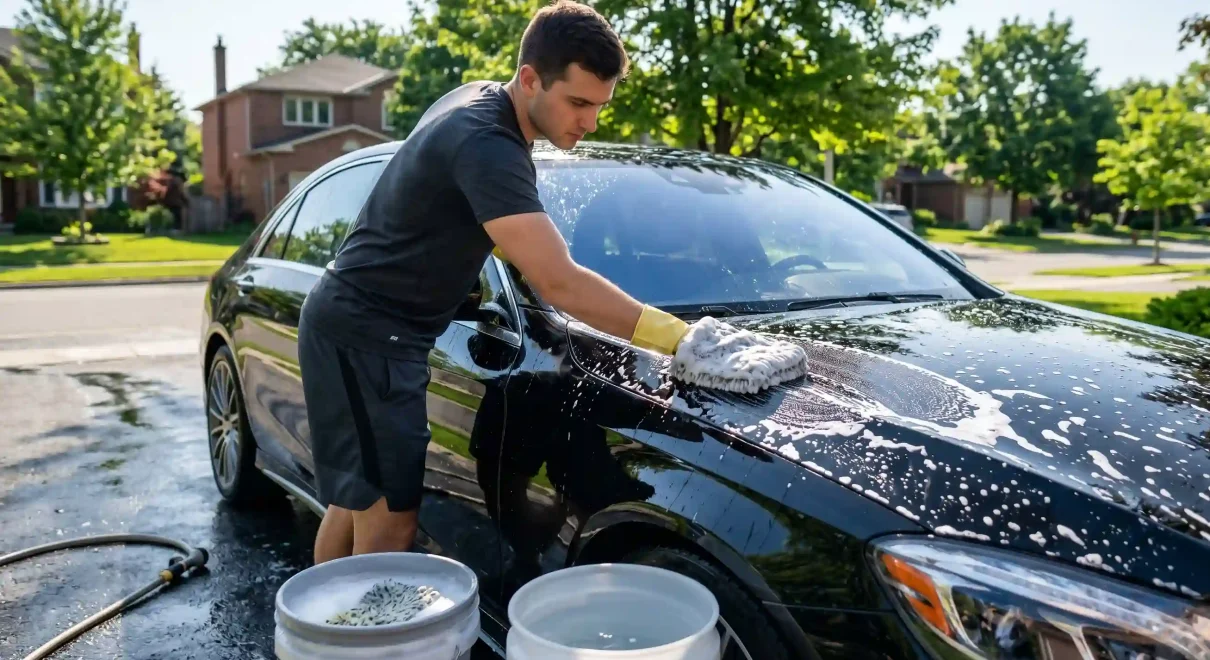
The two-bucket system uses separate containers for clean soapy water and rinse water, preventing contamination accumulation that makes single-bucket washing destructive. A grit guard in the rinse bucket traps settled dirt below the water surface, preventing contamination from transferring back to wash mitts during rinsing.
pH-neutral automotive shampoos clean effectively without stripping protective waxes, sealants, or ceramic coatings that harsh detergents would destroy. These specialized formulas differ fundamentally from dish soaps and household cleaners that remove protective treatments while potentially damaging rubber seals and plastic trim.
Multiple microfiber drying towels with deep pile construction absorb water without dragging contamination across surfaces. Quality drying towels prevent the water spots that Toronto’s hard water creates when mineral-laden water evaporates on paint surfaces.
Wheel-specific brushes and cleaning products address brake dust and road contamination without risking paint contact that cross-contamination creates. Dedicated wheel materials prevent brake dust from transferring to paint surfaces where its iron content causes damage.
The Complete Step-by-Step Washing Process
Following a systematic washing process ensures thorough cleaning while preventing the mistakes that damage paint and protective coatings. This professional sequence maximizes results while minimizing risk throughout each washing session.
Step 1: Pre-Rinse Thoroughly Begin with a thorough vehicle rinse using gentle water pressure that dislodges loose contamination before mitt contact. This pre-rinse removes the largest particles that would otherwise create scratches during washing. Start from the roof and work downward, allowing gravity to assist contamination removal.
Step 2: Wheels and Tires First Address wheels and tires before washing paint panels to prevent brake dust and wheel cleaner overspray from contaminating already-cleaned surfaces. Apply dedicated wheel cleaner and agitate with appropriate brushes before rinsing thoroughly.
Ceramic coating services on wheel surfaces require pH-neutral wheel cleaners that maintain coating integrity while removing contamination. Professional coating application includes guidance about appropriate maintenance products ensuring long-term coating performance.
Step 3: Two-Bucket Washing Method Fill one bucket with pH-neutral car shampoo diluted appropriately and the second with clean rinse water. Load the wash mitt with soapy water and wash one panel at a time using straight back-and-forth motions rather than circular patterns that create swirl marks.
After each panel, rinse the mitt in the clean water bucket and agitate against the grit guard before reloading with soapy water. This process prevents contamination accumulation that makes wash water increasingly abrasive.
Step 4: Work Top to Bottom Always wash from roof to lower panels, following contamination levels from least dirty to most contaminated areas. Rocker panels, lower bumpers, and wheel arches receive last attention using separate or particularly clean mitt sections.
Step 5: Final Rinse Rinse panels immediately after washing to prevent shampoo from drying on surfaces in Toronto’s sunshine. A thorough final rinse removes all soap residue while the water sheet-drying technique minimizes water spots.
Step 6: Proper Drying Use premium microfiber drying towels with gentle blotting rather than dragging motions across surfaces. Work systematically from roof downward, using multiple towels to avoid over-saturating individual cloths that then drag rather than absorb.
Toronto-Specific Washing Considerations
Toronto’s unique environment creates specific washing challenges requiring adapted approaches that address local conditions effectively. Understanding these factors improves washing outcomes throughout the year.
Winter salt removal requires particular attention as road salt creates ongoing corrosive action until completely removed. Thorough undercarriage rinsing during winter washes removes the hidden salt accumulation that conventional washing overlooks while causing the most severe corrosion damage.
Hard water in Toronto creates stubborn water spots when mineral-laden water evaporates on paint surfaces. Washing during cooler periods and drying immediately prevents mineral deposits that require clay bar treatment or professional decontamination to eliminate after formation.
Paint protection film installation simplifies winter washing by creating easy-clean surfaces that release salt and contamination more readily than unprotected paint. Protected surfaces maintain their appearance with less aggressive washing while preventing the damage that winter contamination causes on unprotected vehicles.
Washing frequency during winter months should increase to weekly or bi-weekly schedules removing salt before it causes damage. Summer washing can occur every 2-3 weeks while Toronto’s hot weather demands immediate drying to prevent water spot formation.
Protecting Ceramic Coatings During Home Washing
Ceramic-coated vehicles require specific washing approaches that maintain coating effectiveness throughout the protective lifespan. Understanding these requirements maximizes the investment that professional coating installation represents.
pH-neutral shampoos preserve the chemical structure that ceramic coatings rely upon for their protective and hydrophobic properties. Alkaline or acidic cleaners degrade coating performance over time, reducing the water-beading properties that indicate maintained coating effectiveness.
The hydrophobic properties of quality ceramic coatings dramatically simplify washing by preventing contamination bonding. Less physical agitation becomes necessary when coatings repel the adherence that requires vigorous scrubbing on unprotected surfaces, reducing scratch risk during each washing session.
Annual ceramic coating maintenance washes performed by professional detailers remove accumulated contamination that home washing cannot adequately address. These services restore coating performance while identifying any areas requiring professional attention before damage progresses.
Post-Wash Protection Application
Home washing sessions provide perfect opportunities for applying maintenance protection products that extend professional coating lifespan between professional service appointments. These maintenance applications maximize protection investment returns.
Quick detailer spray application after drying enhances gloss while providing temporary protection that supplements ceramic coatings or sealants. These products improve water-beading properties while adding protective layers that increase resistance to environmental contamination.
Spray waxes applied to clean wet surfaces during washing provide easy protection that requires minimal additional time. These products offer entry-level protection suitable for vehicles without professional coatings while maintaining treated surfaces between professional service visits.
Window tinting services using XPEL ceramic films require specific glass cleaning products during home washing. Ammonia-free glass cleaners maintain tint film integrity while providing streak-free clarity that maximizes visibility and tinting performance throughout the film’s lifespan.
Common Home Washing Mistakes to Avoid
Understanding specific mistakes prevents the damage that casual washing creates while improving outcomes through conscious technique adjustment.
Never wash vehicles in direct sunlight during hot weather as surfaces dry before rinsing removes contamination and shampoo, creating spots and residue requiring additional cleaning. Morning or evening washing during cooler temperatures provides better conditions for quality results.
Avoid automated car washes with rotating brushes that load contamination from previous vehicles onto your paint while their stiff bristles create scratches far exceeding hand washing risks. Touchless automated washes provide acceptable emergency alternatives when hand washing proves impractical.
Never use one wash mitt for both wheels and paint surfaces as cross-contamination transfers brake dust particles that cause severe paint scratching. Dedicated materials for different vehicle areas prevent contamination transfer that professional detailers carefully avoid.
When Professional Washing Becomes Necessary
Home washing maintains between appointments but cannot replace the decontamination, paint inspection, and professional-grade cleaning that periodic professional service provides. Understanding when professional attention becomes necessary maximizes vehicle care effectiveness.
Clay bar decontamination removes embedded particles that washing alone cannot eliminate, typically required every 6-12 months depending on environmental exposure and driving patterns. This essential step creates the smooth paint surface that proper washing maintains between professional sessions.
Post-winter professional washing addresses the salt accumulation and potential damage that winter months create despite regular home washing efforts. Professional inspection identifies any issues requiring attention before spring driving season begins.
Proper home washing technique transforms a potentially damaging routine into genuine vehicle care that maintains paint quality and extends protective coating lifespan. Toronto’s challenging environment demands the thoughtful approach that professional-grade techniques provide for effective home maintenance.
Understanding the right equipment, systematic processes, and specific considerations for Toronto’s climate ensures washing sessions contribute to rather than detract from vehicle condition. These improvements deliver cumulative benefits through maintained appearance and preserved protective treatments.
For Toronto drivers committed to maintaining professional results between service appointments, proper home washing techniques represent essential knowledge that protects significant vehicle investments throughout ownership.
Visit us on Facebook at our Facebook Link and our Instagram Link. Left Lane Customs Inc.