


Cold Snap, Full Charge: The EV & Hybrid Winter Survival Guide for Toronto Drivers
Every EV owner in the GTA remembers their first real cold morning. You unplug with a full battery, pull onto the 401, and watch the range estimate fall faster than the temperature. Hybrid drivers get their own version: the engine that normally stays quiet in traffic suddenly runs almost constantly, and fuel economy slides.
None of this means something is wrong with your vehicle. Batteries simply behave differently in the cold. The good news is that a few habits and a bit of preparation recover most of what winter takes away. This guide covers how to keep your electric or hybrid vehicle efficient, reliable, and protected until spring.
Why Cold Weather Hits EVs and Hybrids Harder
A lithium-ion battery is a chemical device, and chemistry slows down when it gets cold. Three things happen at once:
- The battery delivers less usable energy. Cold cells resist the flow of current, so less of the stored charge is available.
- Cabin heat comes from the battery. A gas car heats the cabin with waste engine heat. An EV has to spend stored energy to do it, and heating is one of the biggest draws on the pack.
- Charging and regenerative braking slow down. A cold battery cannot accept energy quickly, so fast charging takes longer and regen is limited until the pack warms up.
Together, these commonly cost EVs 20 to 30 percent of their range in freezing temperatures, and more on short trips. Hybrids lose efficiency for a related reason: the engine has to run more often to warm itself and the cabin.
1. Precondition While You’re Still Plugged In
This is the single most effective winter habit. Use your vehicle’s app or scheduled departure setting to warm the cabin and battery before you leave, while the car is still connected to the charger. The energy comes from the grid, not your battery, so you start the trip with a warm pack, a clear windshield, and your full range intact.
Plug-in hybrids benefit the same way. A preheated cabin means the gas engine is less likely to fire up just to make heat.
2. Charge Smarter in the Cold
- Keep the car plugged in whenever it’s parked at home. Many EVs use shore power to keep the battery within a safe temperature range.
- Avoid running low. Keep a larger buffer than you would in summer. A cold battery at a low state of charge has less to give, and an unexpected detour or traffic jam costs more.
- Time your charging to finish near departure. A battery that has just finished charging is already warm.
- Precondition before fast charging. If your vehicle offers battery preconditioning when you navigate to a fast charger, use it. A warm pack charges far quicker.
- Park indoors when you can. Even an unheated garage keeps the pack several degrees warmer than the street.
3. Heat the Driver, Not the Whole Cabin
Heated seats and a heated steering wheel use a fraction of the energy the cabin heater does. Set the cabin a couple of degrees lower, lean on the seat heaters, and you’ll notice the difference in range on every trip. If your EV has a heat pump, it is already working more efficiently than a resistance heater, but the same rule applies.
4. Tires, Traction, and Regen
EVs are heavy and deliver torque instantly, which is a demanding combination on ice.
- Fit proper winter tires. They matter more on an EV, not less. Look for tires rated for the extra weight.
- Check pressures often. Tire pressure drops as the temperature falls, and under-inflated tires hurt both grip and range.
- Dial back regenerative braking on slick roads. Strong regen can act like sudden braking on the driven wheels. Use a lower regen setting or your vehicle’s snow mode when the surface is icy.
5. Hybrid-Specific Winter Tips
- Expect the engine to run more. That is normal. Combining short errands into one longer trip lets the engine reach temperature and stay there.
- Mind the 12-volt battery. Hybrids and EVs still rely on a conventional 12-volt battery to start their systems, and it is the most common cause of winter no-starts. Have it tested if it is more than a few years old.
- Plug-in hybrid owners: don’t let the fuel go stale. If you drive mostly on electric power, run the engine now and then and keep the tank reasonably fresh.
6. Protect the Battery Pack and Body From Road Salt
Most EV and hybrid battery packs sit low, right in the path of salt spray. Charge ports, sensors, and cameras take the same beating.
- Rinse the undercarriage regularly. Our winter cleaning guide walks through the full routine step by step.
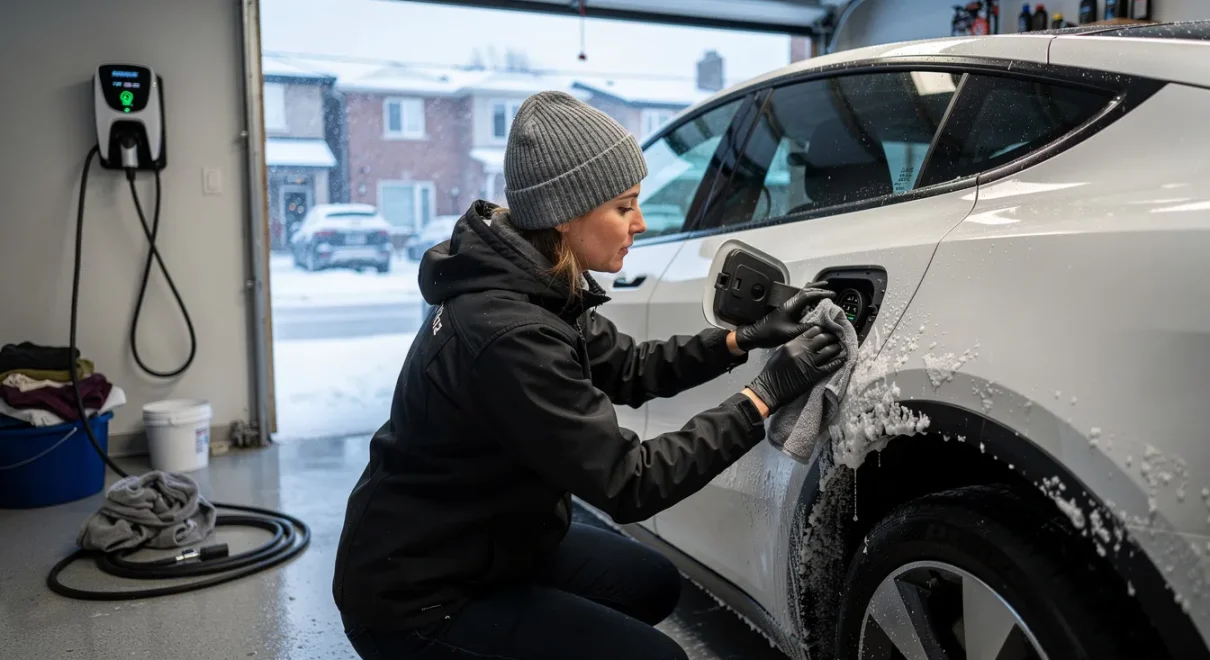
- Keep the charge port clean and dry. Clear snow and ice before plugging in, and never force a frozen charge door.
- Wipe cameras and sensors. Driver-assist systems depend on them, and salt film blinds them quickly.
- Keep the body clean and slick. A dirty, rough surface adds drag. We’ve covered how exterior care affects your EV’s range in detail.
A professional IGL ceramic coating makes all of this easier. Salt and slush release with a simple rinse instead of bonding to the paint, which means less time washing in the cold. Paint protection film on the front bumper and rocker panels adds a physical shield against sand and gravel.
7. Pack a Winter Kit
Keep a snow brush, scraper, gloves, a blanket, a small shovel, and a portable 12-volt booster in the car. In an EV, the booster is there for the 12-volt battery, not the main pack.
Ready for Winter?
Electric and hybrid vehicles handle a Toronto winter very well when they are prepared for it. Precondition before you leave, charge with a buffer, heat yourself first, and keep salt off the battery pack and the paint.
If you want your EV or hybrid protected before the worst of the season arrives, book an appointment with Left Lane Customs in Scarborough. We’ll get it detailed, coated, and ready for the cold.
Visit us on Facebook at our Facebook Link and our Instagram Link. Left Lane Customs Inc.