


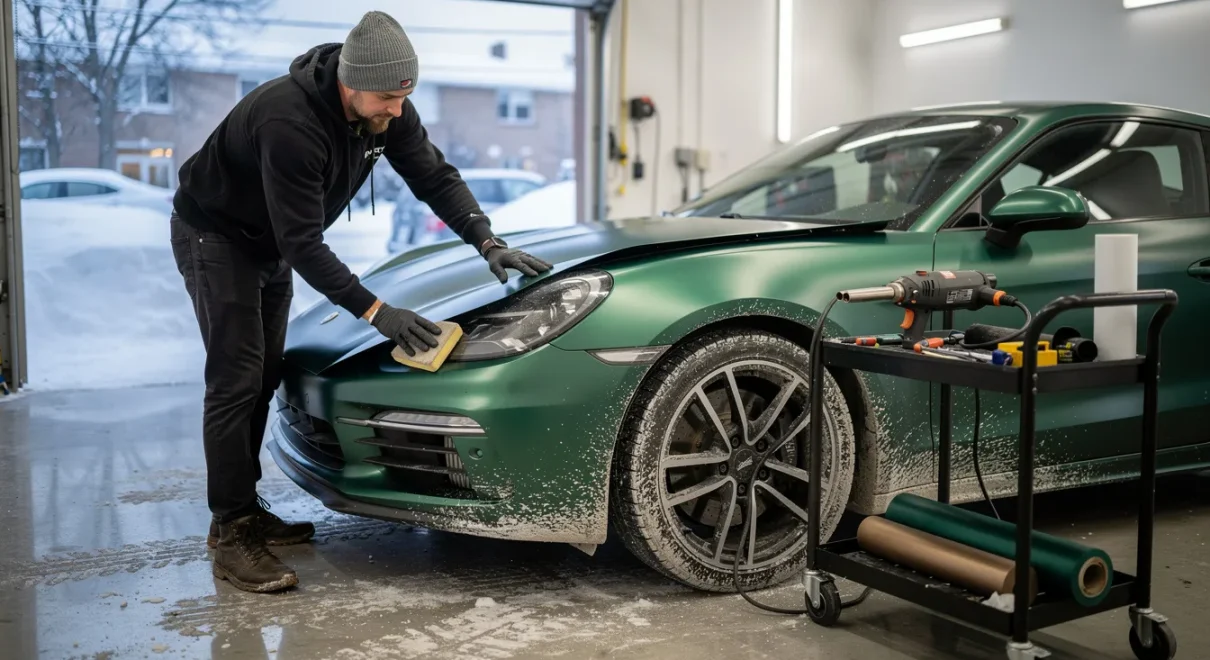
Wrapped for the Deep Freeze: How Long Does a Vinyl Wrap Really Last in Canadian Winters?
A fresh vinyl wrap looks incredible in July. The real question Toronto drivers ask us is what it will look like after its third February, once it has been through road salt, minus-twenty mornings, and a few hundred kilometres of slush on the 401.
The short answer: a quality wrap, professionally installed and properly cared for, handles Canadian winters very well. The longer answer depends on the film, the installation, and how you treat it between November and April. Here is what to expect and how to get the most years out of your wrap.
The Short Answer: How Long Does a Wrap Last?
For a daily-driven vehicle in Ontario, these are realistic ranges:
| Situation | Typical lifespan |
|---|---|
| Premium cast vinyl, garaged, washed regularly | 5 to 7 years |
| Premium cast vinyl, parked outdoors, driven all winter | 3 to 5 years |
| Budget calendered vinyl, driven all winter | 2 to 3 years |
| Any wrap that is neglected through salt season | Often under 3 years |
Horizontal panels such as the hood, roof, and trunk usually age first, because they take the most sun in summer and hold the most snow and ice in winter. Specialty finishes like chrome and some textured films tend to have shorter lifespans than gloss, satin, or matte.
What Canadian Winters Actually Do to Vinyl
Cold alone does not ruin a wrap. It is the combination of conditions that does the damage.
- Road salt and brine. Salt residue left sitting on the film dries it out, dulls the finish, and works into edges and seams, where it attacks the adhesive.
- Freeze-thaw cycles. Water gets under a slightly lifted edge, freezes, expands, and lifts it further. A tiny flaw in November can be a peeling corner by March.
- Brittleness in deep cold. Vinyl stiffens at low temperatures. It becomes more vulnerable to impacts from gravel and ice chunks, and to cracking in older film.
- Sand and grit. Winter roads are treated with abrasives as well as salt. They sandblast lower doors, rocker panels, and the area behind each wheel.
- Ice scrapers and snow brushes. This is the most common cause of winter wrap damage, and it is entirely avoidable.
Five Factors That Decide How Long Your Wrap Lasts
1. Film quality
Cast vinyl is thinner, more stable, and conforms to curves without trying to shrink back. Calendered vinyl is cheaper but shrinks over time, which pulls edges and exposes seams, exactly where winter gets in.
2. Installation
Winter exposes every shortcut. Proper surface preparation, wrapped and sealed edges, and post-heating the film so it holds its shape in recesses all determine whether edges stay down when the freeze-thaw cycle starts. Wraps should be installed in a heated, controlled shop and given time to cure before facing the cold.
3. Where you park
A garage, even an unheated one, keeps snow load, ice, and overnight salt spray off the film. Outdoor parking is the single biggest reason two identical wraps age differently.
4. How you wash
Regular washing is the most important winter habit. Poor washing technique is also a top cause of damage.
5. Added protection
A ceramic coating formulated for vinyl makes the surface slick and hydrophobic, so salt and slush rinse away instead of bonding. It also adds UV resistance for the summer months.
Winter Care Rules for Wrapped Vehicles
- Wash every one to two weeks during salt season. Use a pH-neutral shampoo and a soft microfibre mitt. Our winter washing routine covers the full process.
- Choose touchless or hand washing. Brush-style automatic washes can catch edges and scratch the film, especially matte and satin finishes.
- Be careful with pressure washers. Keep the nozzle at least 30 cm away, use a wide spray pattern, and never aim directly at an edge or seam.
- Never scrape ice off wrapped panels. Warm the vehicle and let ice release on its own. Use a soft foam snow brush on the body, and keep the scraper for the glass only.
- Skip hot water on frozen film. Sudden temperature changes stress the vinyl and the adhesive.
- Dry the edges. After washing, wipe along door edges, mirror bases, and bumper seams so water does not freeze there.
- Inspect once a month. Look closely at corners, wheel arches, and rocker panels. Catching a lifted edge early is a quick fix.
For year-round care, including product recommendations for matte and gloss finishes, see our vinyl wrap maintenance guide.
Signs Your Wrap Is Reaching the End
- Edges or corners that keep lifting after being re-sealed
- Cracking or a dry, chalky texture, usually on the hood and roof first
- Fading or uneven colour between panels
- Bubbling or wrinkling that was not there before
- Stains that no longer wash out
Do not leave a failing wrap on the vehicle for another winter. Old, brittle vinyl comes off in small pieces and can leave adhesive behind, which makes removal slower and more expensive. Removing it on time protects the paint underneath, and that paint is one of the main reasons to wrap a vehicle in the first place.
Is Winter a Bad Time to Get a Wrap?
Not at all, provided the work is done properly. A professional shop installs in a heated bay, so outdoor temperature does not affect the application. The vehicle simply needs to stay indoors long enough for the adhesive to bond before it goes back out into the cold. A new wrap also means your original paint spends the whole salt season under a protective layer.
The Bottom Line
A vinyl wrap in a Canadian winter is not fragile. With quality film, a careful installation, and consistent washing, you can expect three to five years of daily driving and more if the vehicle is garaged. Neglect it, and winter will shorten that quickly.
Left Lane Customs offers professional vinyl wrap installation and removal services in Scarborough for full wraps, partial wraps, and interiors. If you are planning a wrap or want an honest assessment of the one you have, contact us and we will take a look.
Visit us on Facebook at our Facebook Link and our Instagram Link. Left Lane Customs Inc.