


The Summer Car Maintenance Checklist Every Toronto Driver Skips (And Regrets)
Summer feels like the easy season for your car. No snow, no salt, no scraping ice off the windshield at 7am — just warm weather and open roads. That sense of ease is exactly why summer maintenance gets neglected more than any other season. Drivers assume that if the car starts and the AC blows cold, everything’s fine.
It isn’t always. Heat is just as hard on a vehicle as winter is, it just causes damage more quietly. By the time most people notice a summer-related problem, it’s already gotten expensive. Here’s what actually needs attention this time of year, and why so much of it gets missed.
Heat Is Harder on Your Car Than You Think
Winter damage is loud — grinding brakes, a dead battery, a check engine light after a cold morning. Summer damage tends to be slow and silent instead:
- Tires lose pressure as temperatures climb, but hot pavement also accelerates wear on tires that are already low, worn, or misaligned. This is a big deal in a city like Toronto, where summer construction detours and pothole-riddled side streets put extra stress on tires that are already working harder in the heat. If you haven’t checked yours since spring, tire pressure and tread wear deserve a proper look, not just a glance.
- Rubber and plastic components degrade faster in UV and heat, including wiper blades, hoses, and belts. A wiper blade that worked fine in April can be cracked and streaky by August.
- Batteries actually fail more often in summer than winter, even though winter gets the reputation. Heat accelerates the chemical breakdown inside a battery, and a battery that’s already borderline can fail suddenly during a heat wave, often at the worst possible moment.
- Brake components run hotter in stop-and-go summer traffic, cottage-country long weekends, and highway driving with a fully loaded car or trailer. Combine that with brakes that were already close to needing attention, and heat can be the tipping point. It’s worth revisiting our guide on proactive brake maintenance before a road trip, not after a warning light shows up on the highway.
The Paint and Exterior Damage Nobody Talks About
Summer is brutal on a car’s exterior in ways that are easy to underestimate:
UV exposure fades and oxidizes paint over time, especially on vehicles that sit outside all day without any protection. Darker colours show this the most, but every paint job is affected eventually.
Bird droppings, tree sap, and bug splatter are far more corrosive in hot weather. Left on paint under direct sun, they can etch into the clear coat within hours instead of days. This is one of the most common causes of small, permanent paint damage that could have been avoided with a quick wash.
Road tar and asphalt residue pick up more easily on hot pavement, especially on lower body panels and wheel wells.
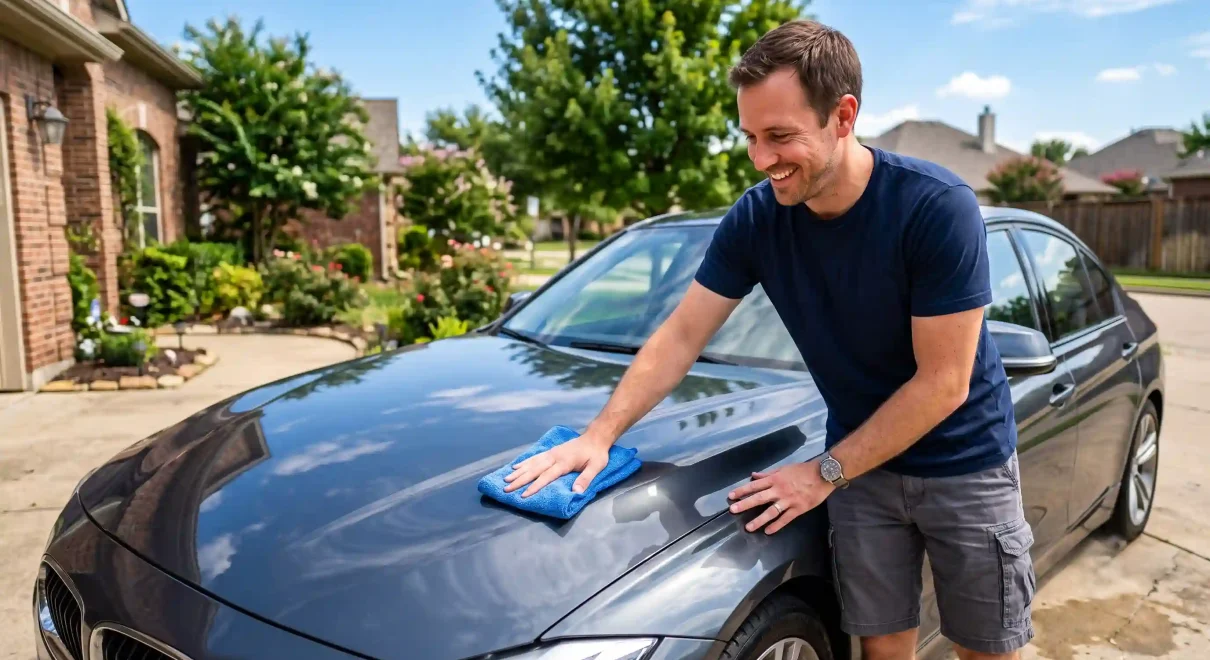
Regular washing helps, but summer is really where proper protection pays for itself. A ceramic coating creates a barrier that makes it significantly harder for sap, droppings, and UV rays to damage the paint underneath, and it makes washing off summer grime dramatically easier. If you’re someone who parks outside all day for work, this is the season where that protection actually earns its keep. For anyone still handling washes at home, our DIY car wash guide covers the techniques that avoid swirl marks and water spotting, which show up faster in direct summer sun.
Air Conditioning: The System You Only Notice When It Fails
Nobody thinks about their AC system until the first genuinely hot day, and then it becomes the only thing that matters. A few signs worth catching early instead of waiting for a full breakdown:
- Airflow that’s noticeably weaker than it used to be
- Warm air even with the AC cranked to maximum
- A musty smell when the AC first kicks on, which usually points to cabin filter or evaporator issues
- Unusual noises when the compressor engages
AC systems lose a bit of refrigerant naturally over time, and a system that’s slightly low will often still blow cold air on a mild day but struggle badly once temperatures climb into the 30s. Catching this in early summer is far less stressful than discovering it during a heat wave with a car full of passengers.
Interior Protection Matters More Than People Realize
Summer sun doesn’t stop at the paint. Dashboards crack, leather dries out and fades, and interior plastics become brittle after repeated exposure to direct sunlight through the windshield, especially in vehicles parked outside all day. Window tinting isn’t just about privacy or looks; it meaningfully reduces UV exposure and interior heat buildup, which protects both the cabin and anyone sitting in it during a long, hot commute.
A Simple Summer Checklist
If you only do a handful of things this season, prioritize:
- Check tire pressure and tread depth, especially before any road trips
- Inspect wiper blades and replace if cracked or streaking
- Have your battery tested, not just visually inspected
- Wash off bird droppings, sap, and bug residue promptly rather than letting them sit
- Get your AC system checked if airflow or cold air output feels weaker than last year
- Consider a ceramic coating or fresh detail if your car spends a lot of time parked outside
None of these are complicated or expensive on their own. What gets expensive is letting several of them slide at once until they compound into a bigger problem in the middle of August.
Want your car properly protected before the rest of summer hits? Book an appointment with our team and we’ll make sure your paint, interior, and protection are ready for the heat.
Visit us on Facebook at our Facebook Link and our Instagram Link. Left Lane Customs Inc.