


One Text Could Cost You $2,500: What Every Toronto Driver Needs to Know About Phones Behind the Wheel
You’re stopped at a red light on your way home. Your phone buzzes. It’s just a quick glance, right? You’re not even moving. That single glance is exactly how most distracted driving tickets — and a shocking number of collisions — actually happen.
If you’re someone who checks a text at a light, glances at GPS directions, or answers calls without a hands-free setup, this one’s for you. Ontario’s distracted driving laws are stricter than most drivers realize, the fines are steep, and the safety risk is even bigger than the price tag. Here’s what you actually need to know.
What Actually Counts as “Distracted Driving” in Ontario
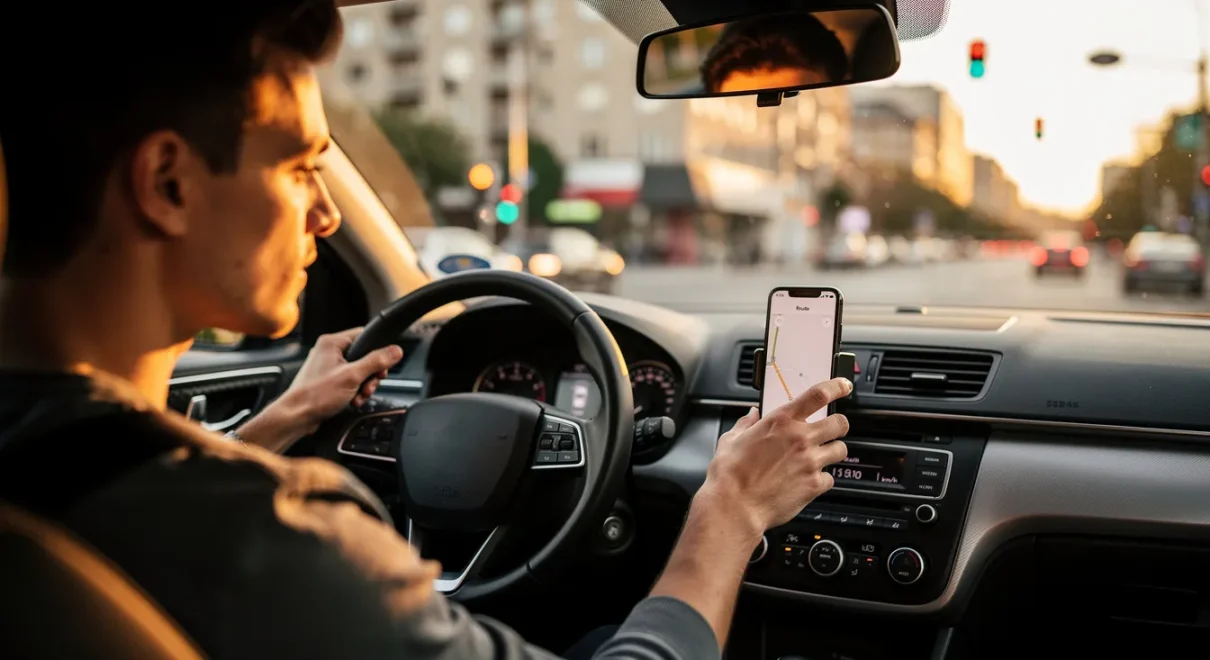
Most drivers assume the law only applies to texting while the car is moving. It doesn’t. Under Ontario’s Highway Traffic Act, simply holding a phone while driving is illegal — even if you’re stopped at a red light or stuck in traffic. That includes checking a map, scrolling social media, or even holding the phone to read a notification.
Eating, applying makeup, reading printed materials, and manually programming a dashboard GPS can also support a distracted driving charge. The rule of thumb Ontario Provincial Police use is simple: if it takes your hands, eyes, or attention off driving, it’s a problem. Hands-free calling through a properly mounted phone or built-in Bluetooth system is still allowed, but the second that phone is in your hand, you’re exposed.
The Real Price Tag of “Just One Text”
The numbers add up faster than most people expect. A first conviction for distracted driving in Ontario carries a minimum fine of $615, three demerit points, and a licence suspension. Repeat offences push the fine as high as $3,000, and the demerit points alone can raise your insurance premium by 15 to 25% at renewal. Factor in the fine, the surcharge, and three years of higher premiums, and a single ticket can easily cost $1,500 to $2,500 over time.
Novice drivers on a G1 or G2 licence have it even tougher. There are no demerit points involved — instead, a first conviction triggers an automatic 30-day licence suspension, and a third conviction means starting the entire graduated licensing process over from scratch.
And the conviction itself never fully disappears. It stays on your driving record permanently, even after the demerit points expire after two years.
Why a Split-Second Really Matters
Here’s the part that doesn’t show up on a ticket: distraction doesn’t just slow your judgment, it slows your reaction time exactly when you need it most. A driver glancing at a phone for even two seconds at city speeds covers enough distance to miss a pedestrian stepping off a curb or a car braking suddenly ahead.
That’s why reaction time and stopping distance go hand in hand with distracted driving risk. If you’ve never thought about how much your brakes factor into a close call, it’s worth reading our breakdown on what to do if your brakes fail while driving — because a distracted moment combined with worn brakes is a much worse combination than either one alone.
Your Best Witness Isn’t a Person — It’s Your Dash Cam
Distracted driving isn’t just a risk you create; it’s a risk you’re exposed to from every other driver around you. Toronto traffic is full of people checking phones at lights, merging without signaling, and following too close while glancing down. You can’t control their habits, but you can protect yourself if something happens.
This is one of the biggest reasons we always recommend a quality camera system for your vehicle. If you’ve been putting it off, our guide on why your car’s camera system is worth more than you think lays out exactly how footage protects you in an insurance dispute or collision claim caused by someone else’s distraction — not yours.
Building Habits That Actually Stick
Knowing the law is one thing. Breaking the habit of reaching for your phone is another. A few things that genuinely work for Toronto drivers:
- Mount it, don’t hold it. A proper dash or vent mount keeps your phone visible for hands-free navigation without ever touching it.
- Use Do Not Disturb While Driving. Both iOS and Android can auto-silence notifications and auto-reply to texts the moment your car starts moving.
- Put it in the back seat or glovebox. If it’s out of reach, it’s out of temptation — especially on short trips where “it’s just five minutes” temptation is highest.
- Set your playlist and directions before you leave the driveway. Most distracted glances happen because something wasn’t set up before the car was in gear.
Distraction-Proofing Goes Beyond the Phone
Reducing distraction is only half the equation. Since a distracted moment eats into your reaction time, the rest of your car needs to be able to pick up the slack — and that starts with your tires. Worn or underinflated tires dramatically increase stopping distance, which is the last thing you want stacked on top of a split-second delay.
If it’s been a while since you’ve checked either, our guides on how long your tires really last and how tire pressure affects your safety on Toronto’s roads are worth a few minutes — because the margin for error on distracted driving shrinks fast when your tires aren’t pulling their weight.
Phone use behind the wheel isn’t just a $615 risk — it’s a real, physical safety risk for you, your passengers, and everyone else sharing the road with you. Ontario’s laws exist because distraction is one of the leading causes of preventable collisions, and no notification is worth what it can cost.
Put the phone down, mount it before you drive, and make sure the rest of your vehicle — brakes, tires, and a dash cam watching your back — is doing its part too. Small habits behind the wheel add up to a much safer commute across the GTA.
Want to make sure your vehicle is doing everything it can to keep you safe? Book a visit with Left Lane Customs and we’ll help you get set up.
Visit us on Facebook at our Facebook Link and our Instagram Link. Left Lane Customs Inc.